By Alexander Blair
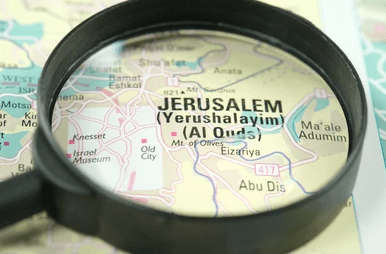
Every trip starts similarly: you disembark from your international flight, jet-lagged yet excited, and navigate through Ben Gurion Airport. There, you face a slightly dystopian computer that scans your face and prints a small blue ticket—your visa into the Holy Land.
Whether you opt for the train to JLM-Navon or take a taxi, the journey into Israel is anything but cushioned. We often forget that Israel is in the heart of the Middle East. The trains bustle with activity, and the taxi rides can be jarring. It’s common to hear Hebrew or Arabic being shouted by drivers, and you might quickly realize that they may not accept your credit card.
On the Israeli highways, drivers adhere to the right side of the road, much like in America. However, apart from taxis, the vehicles are often unfamiliar European compacts. Road signs are in Hebrew, Arabic, and English, but honking horns could be considered the fourth language of Israel.
As you enter the Holy City, the journey may seem unglamorous—traveling on desert roads to a city of limestone buildings filled with Orthodox Jews and international visitors. After a long international flight, many arrive exhausted, and cats roam the streets in droves.
In the midst of all this, it can be challenging to feel the divine presence when every site is crowded with tourists, while religious men smoke and yeshiva boys puff their vapes. Arab shopkeepers try to haggle you as you pass by. Signs in the Old City caution against phone use on Shabbat. The atmosphere can shift abruptly, where Hebrew graffiti gives way to spray-painted images of Mecca and Arabic slang. Police cars drive with their emergency lights perpetually flashing. The divide between Jews and Arabs pales in comparison to the gap between locals and tourists.
Amid the homelessness, the occasional whiff of marijuana, and rainbow flags that signal anything but a tribute to Noah, the Holy City can start to feel quite ordinary.
But then comes that moment—the veil lifts, and you stand before the throne where prophecies and histories come alive. In that place, you are not merely reading the Bible; you are living it. The breeze of Jerusalem feels reminiscent of the refreshing air the priests must have experienced. The Hebrew chants echo the prayers of watchful souls standing by the wall day and night. You walk on the ancient roads that the prophets themselves may have traversed. This city truly feels like the center of the world, as if the Earth has a heart, and that heart is Yerushalay’im.
For me, that moment arrived on Erev Shabbat (Friday at sunset). I had been traveling in Northern Samaria and returned to downtown Jerusalem with a heavy heart, grappling with what God had revealed during my trip. My wife, seven months pregnant, was facing challenges while I was away. Although my journey had sparked hope, it also left me with many questions about my calling.
Upon arriving at the Old City, I wandered through the Christian quarter without any agenda, ultimately finding my way to the Western Wall. I positioned myself near the library of Siddurim (prayer books) and prayed quietly. Stepping out to take a call from my wife, I was soon reminded to put my phone away for Shabbat. The Breslovers, a group of Hasidic Jews, began to arrive in large numbers. Kabbalat Shabbat commenced, and the young Hasidim started to dance. They were dressed in khaki pants, white shirts, and knitted kippahs, their peyots bouncing with each step.
They danced.
They sang.
They cried.
The voices from the women’s section grew louder, and I unexpectedly encountered my friend Robson. Together, we stood in awe, watching the scene unfold.
That was when I realized:
God was there.
Jerusalem often mirrors the world. What happens there influences nations. The balance between the ordinary and the sacred is a vital part of our daily lives. Sometimes, our everyday experiences are filled with the cats and dark alleyways of Jerusalem, while our minds are occupied with the hustle and bustle of survival. Desires and decisions collide in our subconscious as we strive to align the mundane with our spiritual practices. This is akin to the Tohu-v-Bohu (the Void from Genesis 1:2), the chaos of the unformed. It is this void that God sends His Spirit to hover over, to form order, to write the Law on our hearts, and to make things new. Our lives are akin to “Yerushalay’im”—the two cities that exist as one.
Up to this point, it may seem I have spent more time discussing the mundanity of the Holy City than its “Holy” aspect. We often focus on the frustrations of the mundane. But what I learned is that when we seek the Spirit and are willing to hit the “pause” button for a moment, we find the presence of God in that space. Just like the Breslov Hasidim, our hearts begin to sing. Our souls cry out “Abba,” meaning “Dear Father.” God has not pulled us out of the world; instead, He reveals Himself even through the simplest tasks. The core idea of Judaism is that our calling is to sanctify the mundane rather than escape it. The parables richly compare the Kingdom to the simple things of this world, revealing God within them. It may seem strange that we have only one day of rest, but that doesn’t mean God can’t be found in the six days of labor. And although we may have an eternity of rest in Heaven, that doesn’t mean God can’t be found today.
 Swords Into Plowshares
Leave a comment