Welcome to WordPress! This is a sample post. Edit or delete it to take the first step in your blogging journey. To add more content here, click the small plus icon at the top left corner. There, you will find an existing selection of WordPress blocks and patterns, something to suit your every need for content creation. And don’t forget to check out the List View: click the icon a few spots to the right of the plus icon and you’ll get a tidy, easy-to-view list of the blocks and patterns in your post.
Category: Uncategorized
-

Beyond the Obstacle
Welcome to WordPress! This is a sample post. Edit or delete it to take the first step in your blogging journey. To add more content here, click the small plus icon at the top left corner. There, you will find an existing selection of WordPress blocks and patterns, something to suit your every need for content creation. And don’t forget to check out the List View: click the icon a few spots to the right of the plus icon and you’ll get a tidy, easy-to-view list of the blocks and patterns in your post.
-

Growth Unlocked
Welcome to WordPress! This is a sample post. Edit or delete it to take the first step in your blogging journey. To add more content here, click the small plus icon at the top left corner. There, you will find an existing selection of WordPress blocks and patterns, something to suit your every need for content creation. And don’t forget to check out the List View: click the icon a few spots to the right of the plus icon and you’ll get a tidy, easy-to-view list of the blocks and patterns in your post.
-

Collaboration Magic
Welcome to WordPress! This is a sample post. Edit or delete it to take the first step in your blogging journey. To add more content here, click the small plus icon at the top left corner. There, you will find an existing selection of WordPress blocks and patterns, something to suit your every need for content creation. And don’t forget to check out the List View: click the icon a few spots to the right of the plus icon and you’ll get a tidy, easy-to-view list of the blocks and patterns in your post.
-

Teamwork Triumphs
Welcome to WordPress! This is a sample post. Edit or delete it to take the first step in your blogging journey. To add more content here, click the small plus icon at the top left corner. There, you will find an existing selection of WordPress blocks and patterns, something to suit your every need for content creation. And don’t forget to check out the List View: click the icon a few spots to the right of the plus icon and you’ll get a tidy, easy-to-view list of the blocks and patterns in your post.
-

Adaptive Advantage
Welcome to WordPress! This is a sample post. Edit or delete it to take the first step in your blogging journey. To add more content here, click the small plus icon at the top left corner. There, you will find an existing selection of WordPress blocks and patterns, something to suit your every need for content creation. And don’t forget to check out the List View: click the icon a few spots to the right of the plus icon and you’ll get a tidy, easy-to-view list of the blocks and patterns in your post.
-
Amsterdam Statement
Dear Friends of Israel,
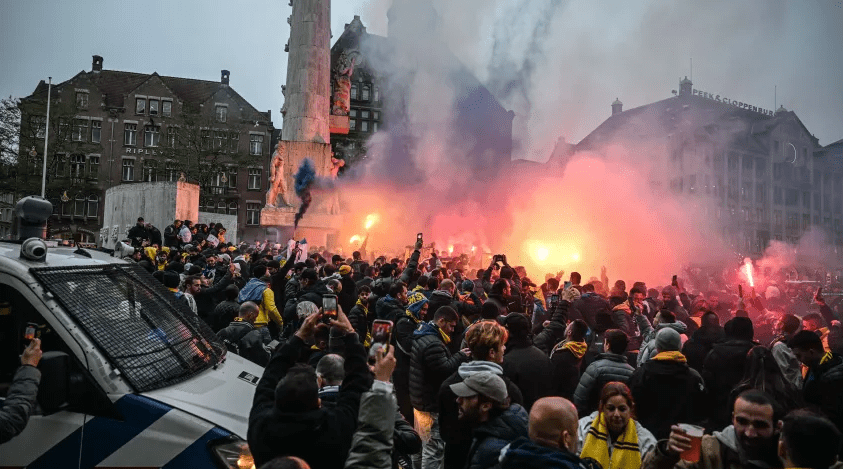
On November 7th, a horrifying wave of anti-Semitic violence erupted in Amsterdam as pro-Palestinian extremists launched brutal attacks on Israeli fans following a Europa League match between Ajax and Maccabi Tel Aviv. Scores of Israeli fans were assaulted, leaving many hospitalized, while Dutch authorities made at least 62 arrests amid the chaos. The shocking brutality of these attacks prompted swift condemnation from both the Dutch and Israeli governments, denouncing the violence as an unmistakable act of anti-Semitism. In an immediate response to protect its citizens, the Israeli Foreign Ministry coordinated with Dutch authorities to organize emergency EL AL flights, ensuring safe passage home for Israelis. This swift action underscores Israel’s unwavering commitment to the safety and dignity of its people.
As you are aware, the Jewish community in the Netherlands endured brutal attacks for no other reason than their identity as Jews. This isn’t just an assault against the Jewish people; it’s an assault on the people God has called to be a light to the nations, a direct affront to the God of Israel, who is also the God of the whole world.Today, we’re urgently calling on our evangelical friends in the Netherlands and worldwide to stand in true solidarity. We need leaders to rise, to pray, and to take immediate action against this baseless hatred.
These attacks may begin with the Jewish people, but history has shown that such hate ultimately threatens the entire house of faith, including the Christian Church.
We deeply appreciate your commitment to work together to continue to mobilize others in strength against this evil. We are committed to moving swiftly to join the fight in this critical hour.
Please let us know how we can further strengthen and support you, your families, and ministries in this critical fight.
– The S2PS Team -
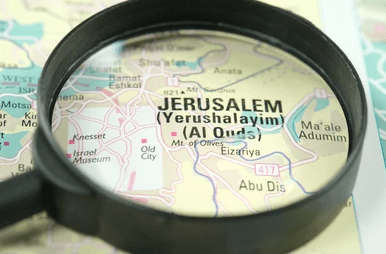
Jerusalem – The two cities
By Alexander Blair
Every trip starts similarly: you disembark from your international flight, jet-lagged yet excited, and navigate through Ben Gurion Airport. There, you face a slightly dystopian computer that scans your face and prints a small blue ticket—your visa into the Holy Land.
Whether you opt for the train to JLM-Navon or take a taxi, the journey into Israel is anything but cushioned. We often forget that Israel is in the heart of the Middle East. The trains bustle with activity, and the taxi rides can be jarring. It’s common to hear Hebrew or Arabic being shouted by drivers, and you might quickly realize that they may not accept your credit card.
On the Israeli highways, drivers adhere to the right side of the road, much like in America. However, apart from taxis, the vehicles are often unfamiliar European compacts. Road signs are in Hebrew, Arabic, and English, but honking horns could be considered the fourth language of Israel.
As you enter the Holy City, the journey may seem unglamorous—traveling on desert roads to a city of limestone buildings filled with Orthodox Jews and international visitors. After a long international flight, many arrive exhausted, and cats roam the streets in droves.
In the midst of all this, it can be challenging to feel the divine presence when every site is crowded with tourists, while religious men smoke and yeshiva boys puff their vapes. Arab shopkeepers try to haggle you as you pass by. Signs in the Old City caution against phone use on Shabbat. The atmosphere can shift abruptly, where Hebrew graffiti gives way to spray-painted images of Mecca and Arabic slang. Police cars drive with their emergency lights perpetually flashing. The divide between Jews and Arabs pales in comparison to the gap between locals and tourists.
Amid the homelessness, the occasional whiff of marijuana, and rainbow flags that signal anything but a tribute to Noah, the Holy City can start to feel quite ordinary.
But then comes that moment—the veil lifts, and you stand before the throne where prophecies and histories come alive. In that place, you are not merely reading the Bible; you are living it. The breeze of Jerusalem feels reminiscent of the refreshing air the priests must have experienced. The Hebrew chants echo the prayers of watchful souls standing by the wall day and night. You walk on the ancient roads that the prophets themselves may have traversed. This city truly feels like the center of the world, as if the Earth has a heart, and that heart is Yerushalay’im.
For me, that moment arrived on Erev Shabbat (Friday at sunset). I had been traveling in Northern Samaria and returned to downtown Jerusalem with a heavy heart, grappling with what God had revealed during my trip. My wife, seven months pregnant, was facing challenges while I was away. Although my journey had sparked hope, it also left me with many questions about my calling.
Upon arriving at the Old City, I wandered through the Christian quarter without any agenda, ultimately finding my way to the Western Wall. I positioned myself near the library of Siddurim (prayer books) and prayed quietly. Stepping out to take a call from my wife, I was soon reminded to put my phone away for Shabbat. The Breslovers, a group of Hasidic Jews, began to arrive in large numbers. Kabbalat Shabbat commenced, and the young Hasidim started to dance. They were dressed in khaki pants, white shirts, and knitted kippahs, their peyots bouncing with each step.
They danced.
They sang.
They cried.The voices from the women’s section grew louder, and I unexpectedly encountered my friend Robson. Together, we stood in awe, watching the scene unfold.
That was when I realized:
God was there.Jerusalem often mirrors the world. What happens there influences nations. The balance between the ordinary and the sacred is a vital part of our daily lives. Sometimes, our everyday experiences are filled with the cats and dark alleyways of Jerusalem, while our minds are occupied with the hustle and bustle of survival. Desires and decisions collide in our subconscious as we strive to align the mundane with our spiritual practices. This is akin to the Tohu-v-Bohu (the Void from Genesis 1:2), the chaos of the unformed. It is this void that God sends His Spirit to hover over, to form order, to write the Law on our hearts, and to make things new. Our lives are akin to “Yerushalay’im”—the two cities that exist as one.
Up to this point, it may seem I have spent more time discussing the mundanity of the Holy City than its “Holy” aspect. We often focus on the frustrations of the mundane. But what I learned is that when we seek the Spirit and are willing to hit the “pause” button for a moment, we find the presence of God in that space. Just like the Breslov Hasidim, our hearts begin to sing. Our souls cry out “Abba,” meaning “Dear Father.” God has not pulled us out of the world; instead, He reveals Himself even through the simplest tasks. The core idea of Judaism is that our calling is to sanctify the mundane rather than escape it. The parables richly compare the Kingdom to the simple things of this world, revealing God within them. It may seem strange that we have only one day of rest, but that doesn’t mean God can’t be found in the six days of labor. And although we may have an eternity of rest in Heaven, that doesn’t mean God can’t be found today.
-
The promise of the Land – Aliyah #01
The Biblical Basis for Israel’s Right to The Land
By Yehoshura M. Nevar
The Promise of the Land
To understand Israel’s connection to the land historically known as Canaan, we must start at the beginning of the Bible with the promise made to the patriarch Abraham. In Genesis 12:1-3, we read: “Now the LORD had said to Abram, ‘Get out of your country, from your family, and from your father’s house to a land that I will show you. I will make you a great nation; I will bless you and make your name great; and you shall be a blessing. I will bless those who bless you and curse him who curses you; and in you all the families of the earth shall be blessed.’” (vs. 4, 5b) Following this command, Abram departed as the LORD had instructed and arrived in the land of Canaan (vs. 6). It is significant to note that the land was initially called Canaan, not Palestine.
Abram passed through the land to Shechem, currently known as Nablus, located in the Samaria region, sometimes referred to as the West Bank. It is here that the LORD appeared to Abram and declared, “To your descendants I will give this land.” This statement emphasizes that the land under current contention is specifically designated for Abram’s descendants. Furthermore, the LORD instructed Abram to look in all directions, saying, “for all the land which you see I give to you and your descendants forever.”
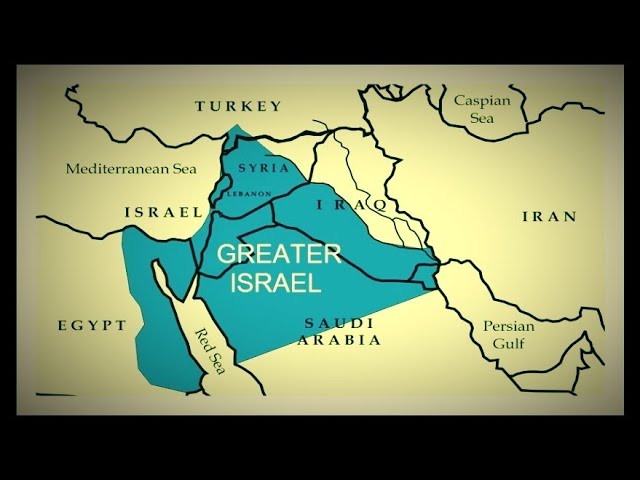
After God changed his name to Abraham, the covenant was further clarified. In Genesis 17:7-8, God states: “And I will establish My covenant between Me and you and your descendants after you in their generations, for an everlasting covenant, to be God to you and your descendants after you. Also I give to you and your descendants after you the land in which you are a stranger, all the land of Canaan, as an everlasting possession; and I will be their God.” Here, it is made unmistakably clear that all of Canaan is promised to Abraham and his descendants forever. Genesis 15:18 further defines this promise: “To your descendants I have given this land, from the river of Egypt to the great river, the River Euphrates.” This indicates that the territory promised by the LORD significantly exceeds what the modern State of Israel currently inhabits.
The promise is reaffirmed to Abraham’s descendants, as God appears to Isaac in Genesis 26:3, saying: “Dwell in this land and I will be with you and bless you, for to you and your descendants I give all these lands, and I will perform the oath I swore to Abraham your father.” God promises that Isaac’s descendants will multiply and that “in your seed all the nations of the earth shall be blessed.” Notably, Isaac resided in what is now known as Gaza, a region also included in this divine promise. Importantly, the Philistines, who occupied this land, were not indigenous to Canaan but migrated from the island of Caphtor (believed to be Crete; see Genesis 10:14, 1 Chronicles 1:12, Amos 9:7, Jeremiah 47:4).
God later appears to Jacob, who is renamed Israel in Genesis 32:28, in a dream, declaring: “I am The LORD, God of Abraham your father, and the God of Isaac. The land on which you lie, I will give it to you and your descendants.” This promise is reiterated in Genesis 35:10-12: “Thy name shall not be called any more Jacob, but Israel shall be thy name…And the land which I gave Abraham and Isaac, to thee will I give it, and to thy seed after thee will I give the land.”
In conclusion, the language of God’s promises is clear and unequivocal. As the Creator of heaven and earth, God has the sovereign authority to grant land to whomever He chooses. He has explicitly stated that all of Canaan is given to Israel and its descendants.
 Swords Into Plowshares